introduction.
The Einstein Telescope (ET) requires ultra‑low‑vibration cryogenic cooling for main optics at ~10 K. At ETpathfinder, seismic excitation is aimed to be ~4 nm/√Hz (2–10 Hz), ≈32 nm peak‑to‑peak. The Cooll‑Demcon kryoz–UT consortium is developing a sorption‑driven Joule–Thomson (JT) cryocooler that reaches ~8 K without active moving parts. The timeline of the ET is shown in Figure 1.

system overview.
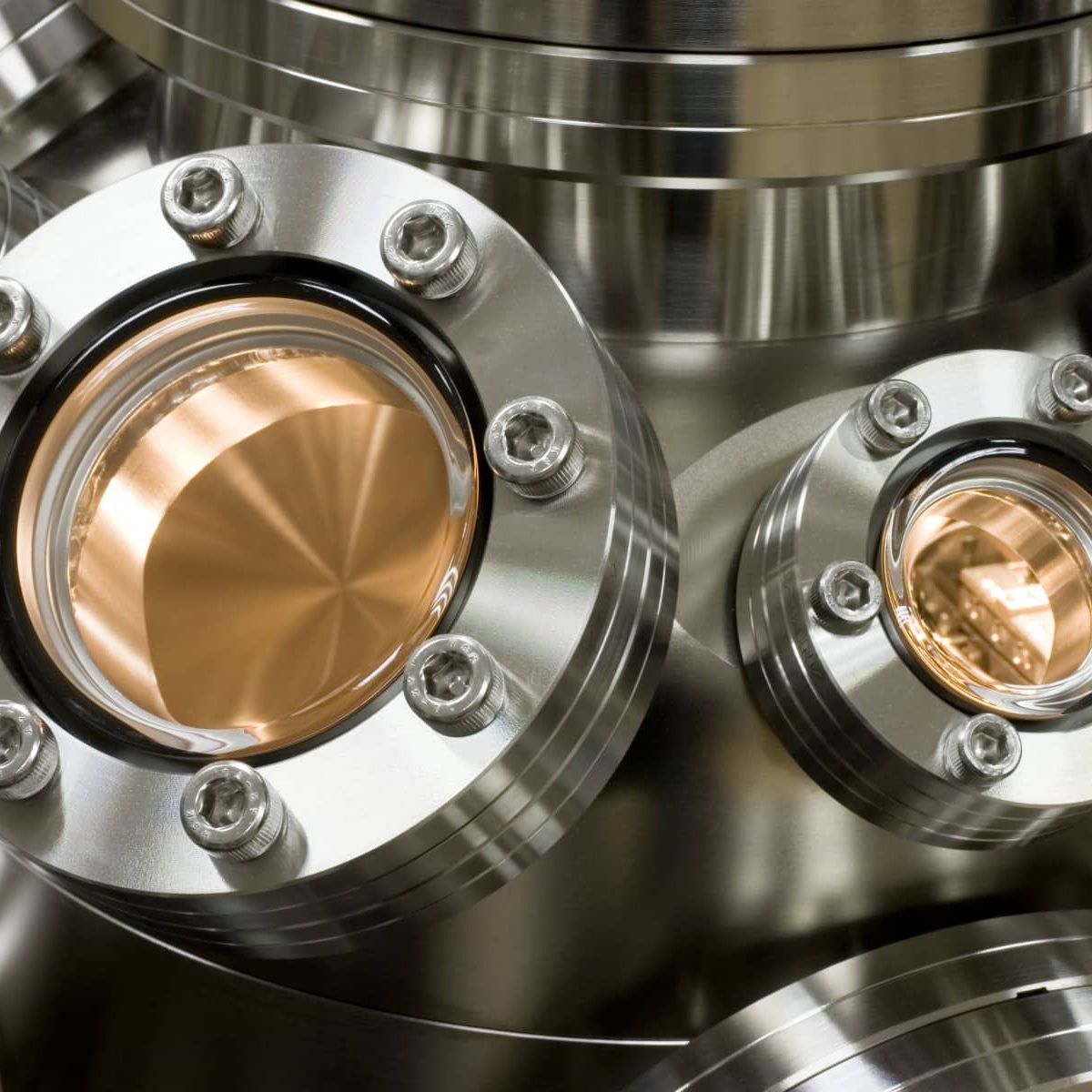
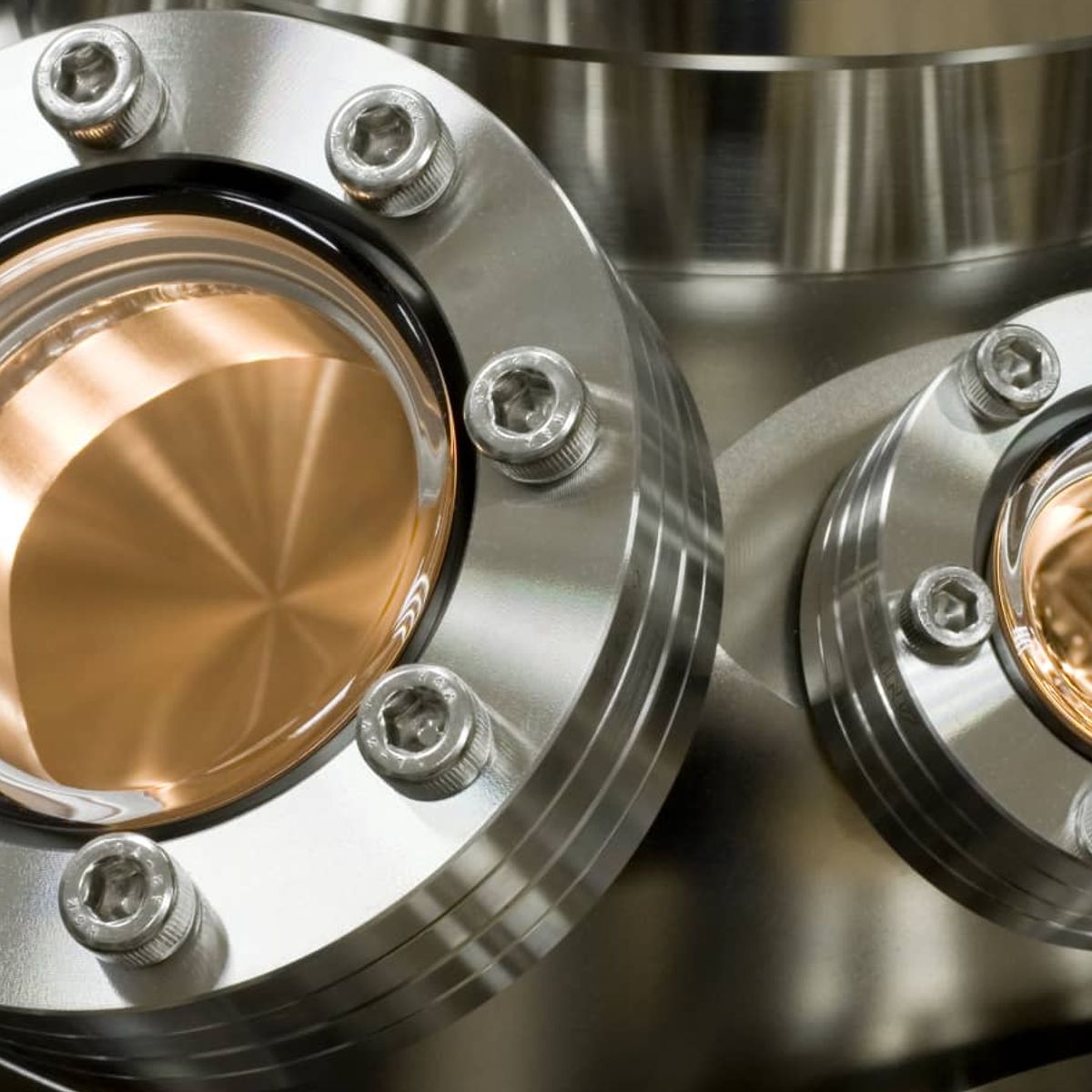
To surpass KAGRA’s sensitivity aim, cooling must add virtually no vibration at the coldtip. The cooler consists of three stages using neon, hydrogen, helium—providing ~50 mW at ~8 K; helium gas flows in the coldtip, avoiding vibrations due to phase change; in addition, neon and hydrogen offer intermediate cooling via shields. A liquid‑nitrogen bath cools the shields, lowering radiative loads; vacuum in the mirror tower (Figure 2) eliminates convective heatloads.

working principle.
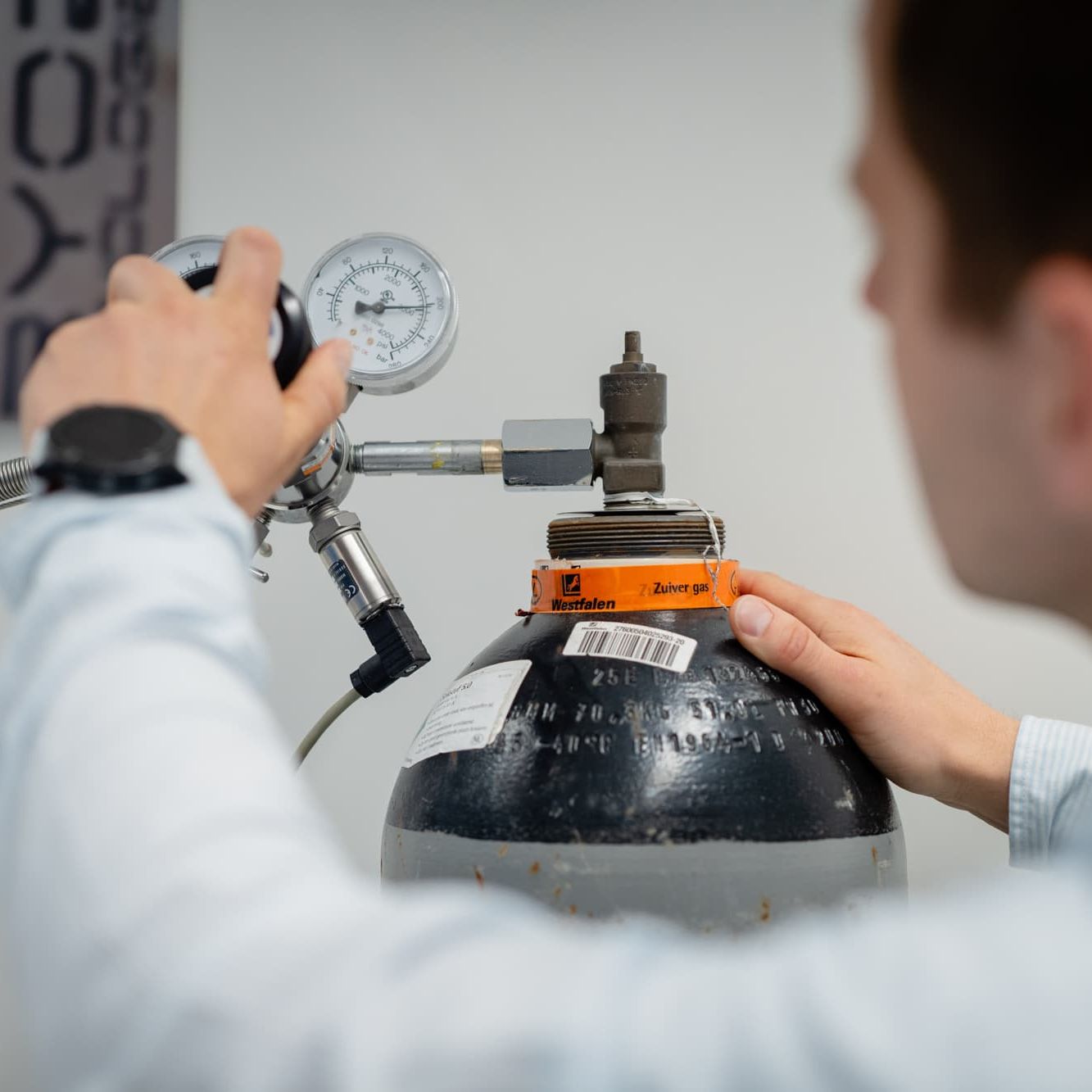
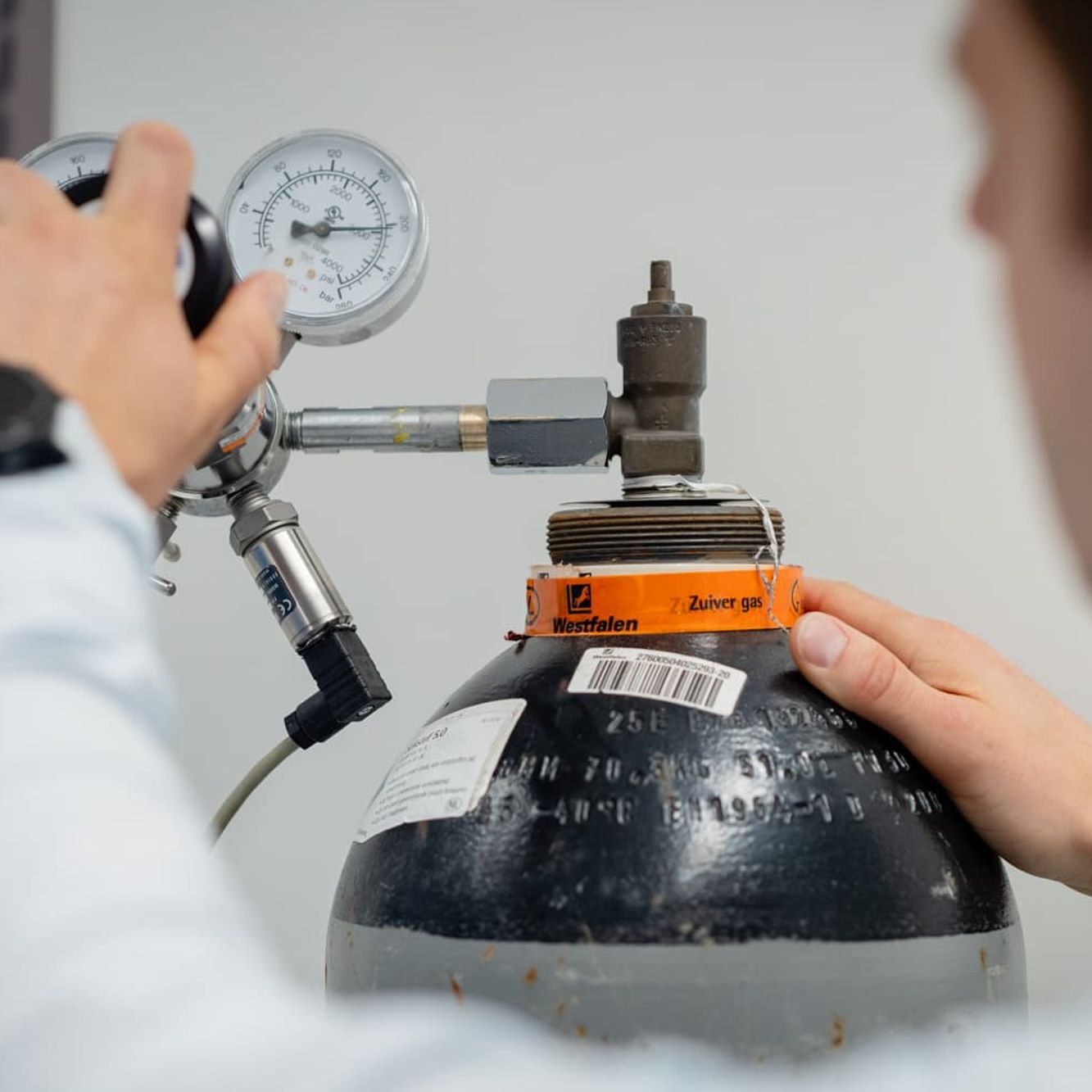
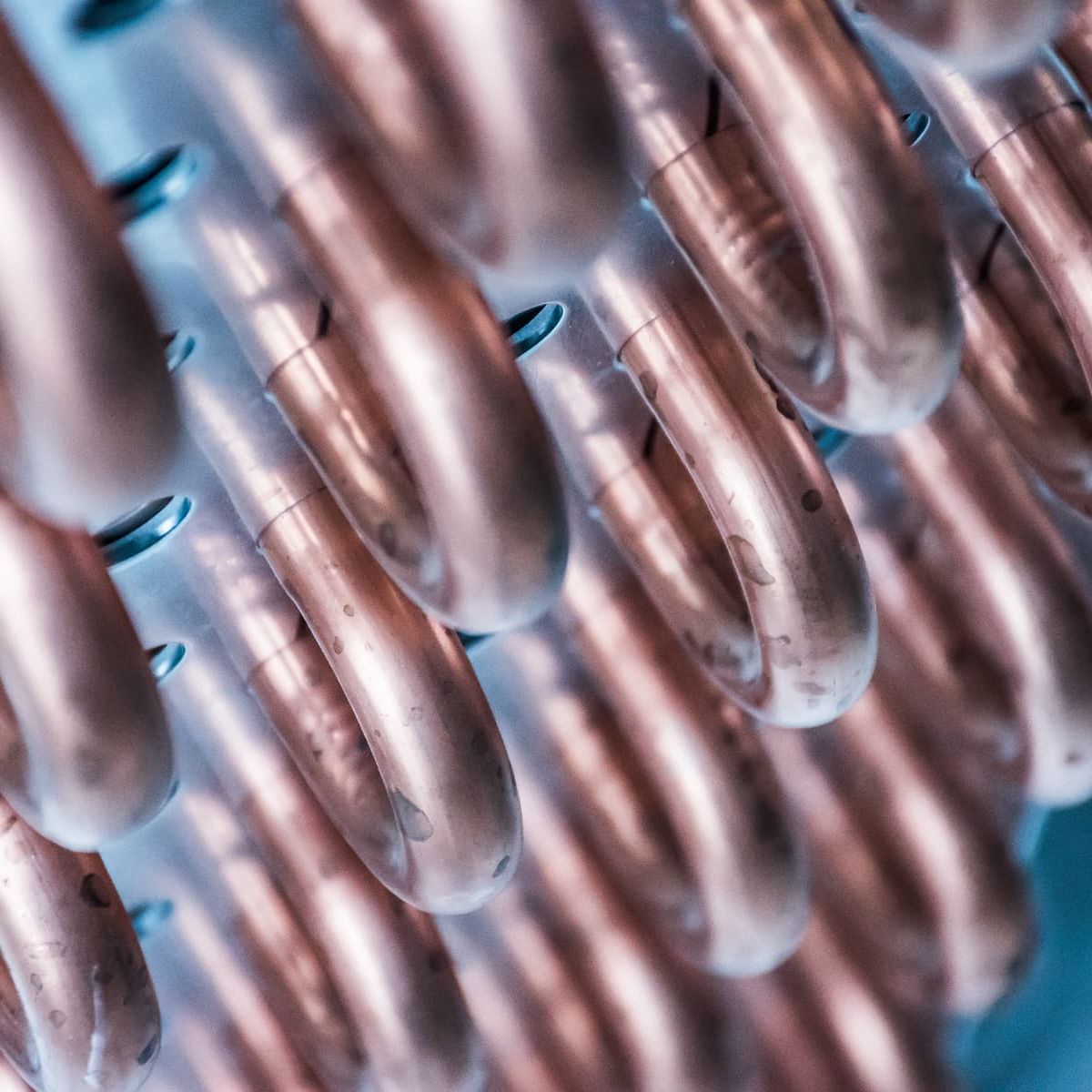
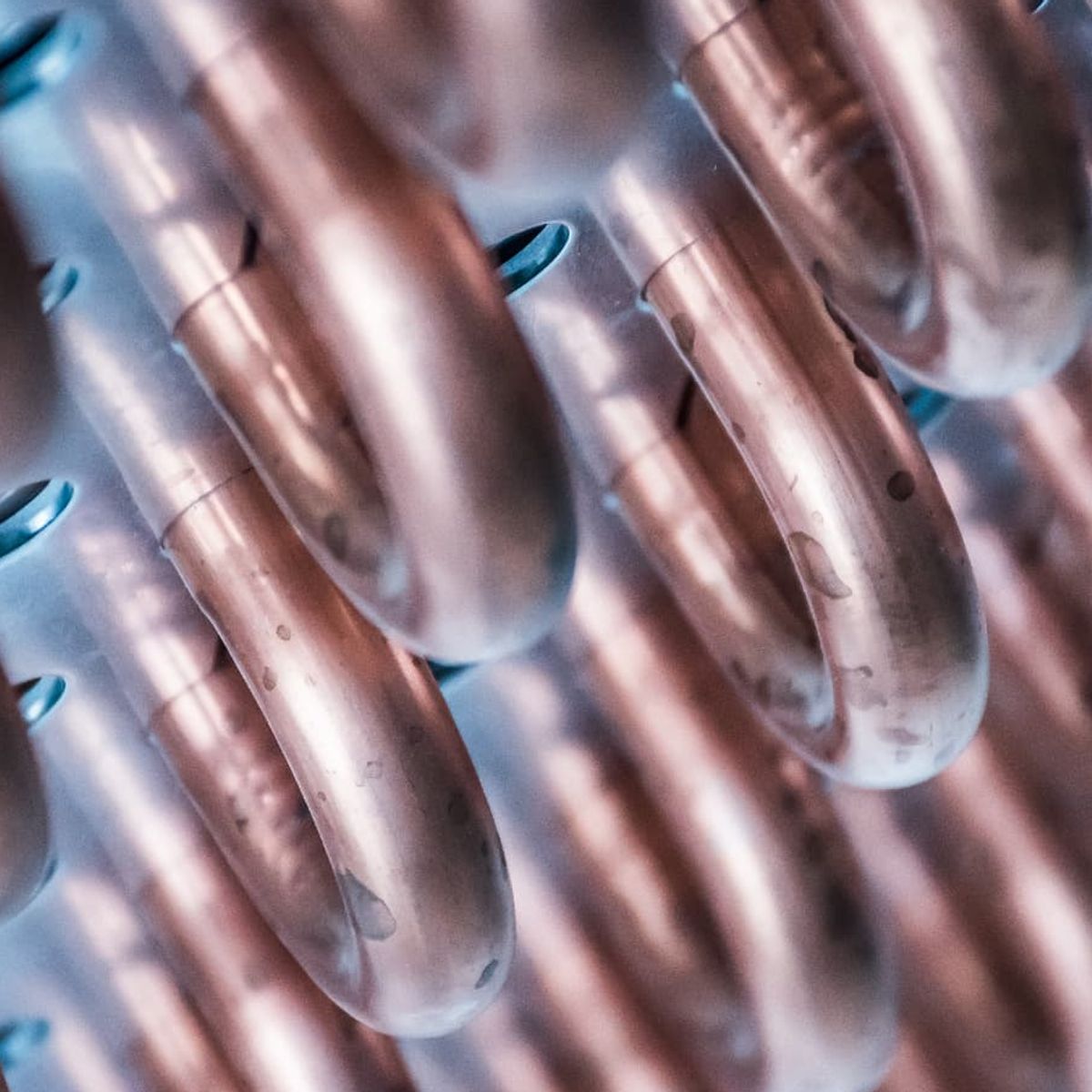
Activated‑carbon sorption cells are thermally cycled: the heating phase desorbs gas to the high‑pressure buffer; while during the cooling phase, gas is adsorbed from the low‑pressure side. Phased cells and two buffers smoothen the pulsed mass·flow. The high‑pressure gas flow passes a counterflow heat exchanger (CFHX), expands isenthalpically across a porous‑plug JT restriction, and provides cooling power. The return flow pre‑cools the incoming stream (recuperation); flows are kept laminar (e.g. five parallel neon lines) and bends meet Dean‑number limits (Figure 2 and 3).

systems engineering & LEM.
A stage‑gate SE approach turns stakeholder needs into verifiable requirements and manages interfaces. A modular lumped‑element model (LEM) (Figure 4) in Simulink™ uses input such as pressures, temperatures, mass flows and component dimensions to predict output such as cooling power. The compressor is modeled as a 2D block with solid adsorbent, free gas and adsorbed gas in equilibrium. A 250 W Gifford–McMahon “kickstarter” reduces the total cooldown time to < 7 days.

conclusion.
The vibration‑free JT sorption cooler provides a technology roadmap to ET readiness: three stages enable the delivery of ~50 mW at ~8 K without active moving parts, while UHV and shields minimise parasitic loads. Vibration is mitigated by high/low‑pressure buffers smoothing the pulsating flow, using a porous‑plug JT–restriction, ensuring laminar‑flow with five parallel neon lines, applying Dean‑number limits in bends, implementing capillary‑assisted evaporators to stabilize two‑phase behaviour, and large‑area LN₂ baths avoiding violent boiling. Construction is ongoing, validation is planned for Q1 2026, and first integration by end‑2026; the system targets TRL 6–7 for ETpathfinder and ET.

“eliminating vibration at the source through sorption‑driven cooling.”
For next‑generation gravitational wave detection, even nanometre‑scale disturbances matter. This cryocooler avoids mechanical actuation entirely, using cyclic adsorption to generate pressure and flow.
The result is a highly controlled cooling process, where flow stability, laminar behaviour and staged expansion are engineered to deliver ~8 K performance without introducing vibration into the system.