
highlights
- Cryogenic systems modelling to predict performance and dynamic behaviour.
- Ultra-low-vibration cooling for vibration-sensitive applications.
- Multistage Joule-Thomson cooling down to 4 kelvin
- Hands-on experience with mechanical cryocoolers, Joule-Thomson systems and dewars.
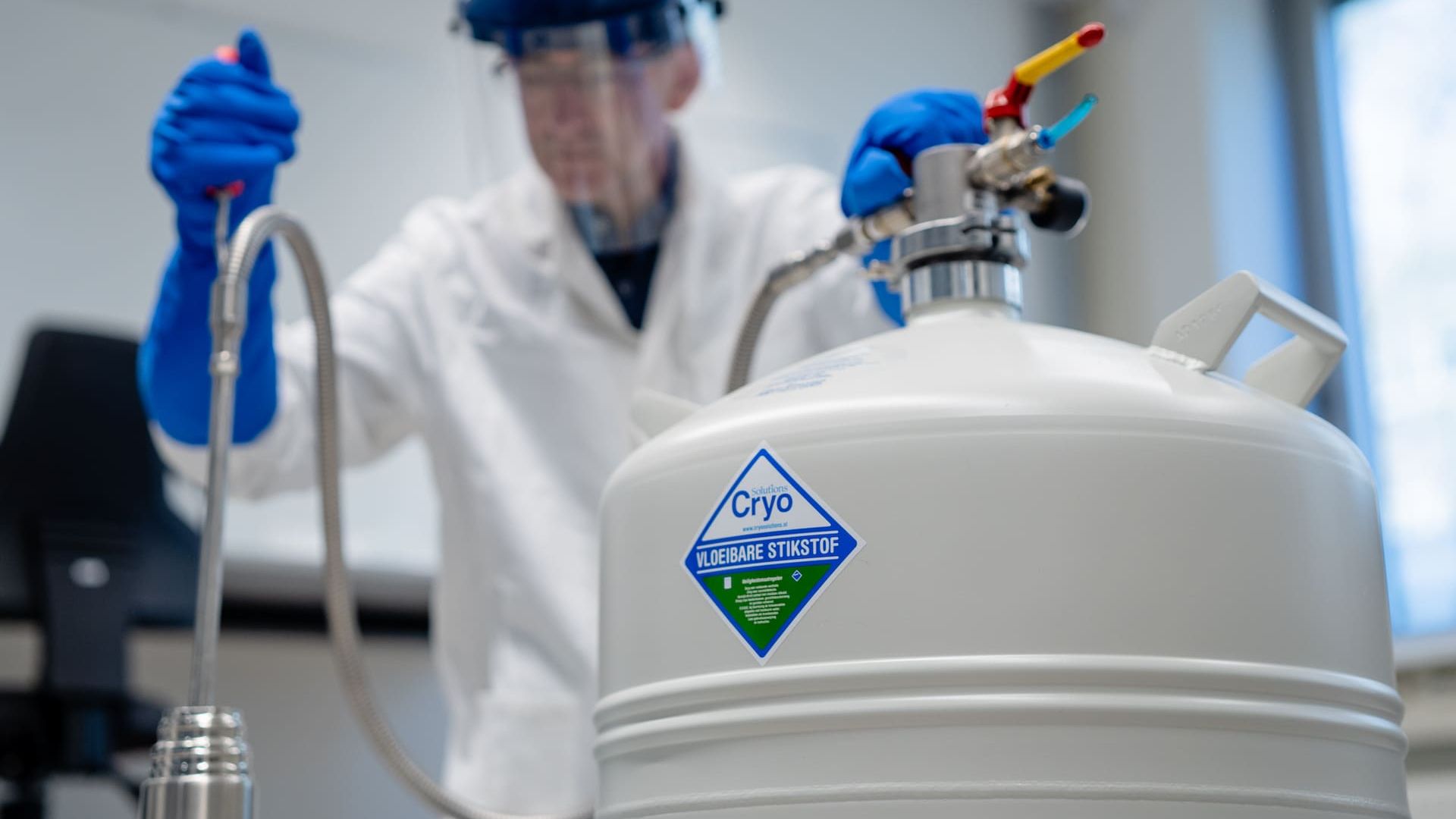
- Liquid nitrogen testing facilities for experiments under cryogenic conditions.
- Prototyping and experimental validation using our in-house cryogenic infrastructure.
cryogenic system design, modelling and testing.
We have extensive hands-on experience in designing, modelling and developing cryogenic systems. This has given us a practical understanding of how materials, fluids and physical processes behave at low temperatures, and how these changes affect system performance and dynamic behaviour.
We combine this experience with modelling to support cryogenic system design. In our own laboratories, we build experimental setups, develop prototypes and perform measurements at low and ultra-low temperatures. Our facilities are equipped for working with cryogens and high-pressure gases, allowing us to investigate system behaviour under cryogenic conditions.
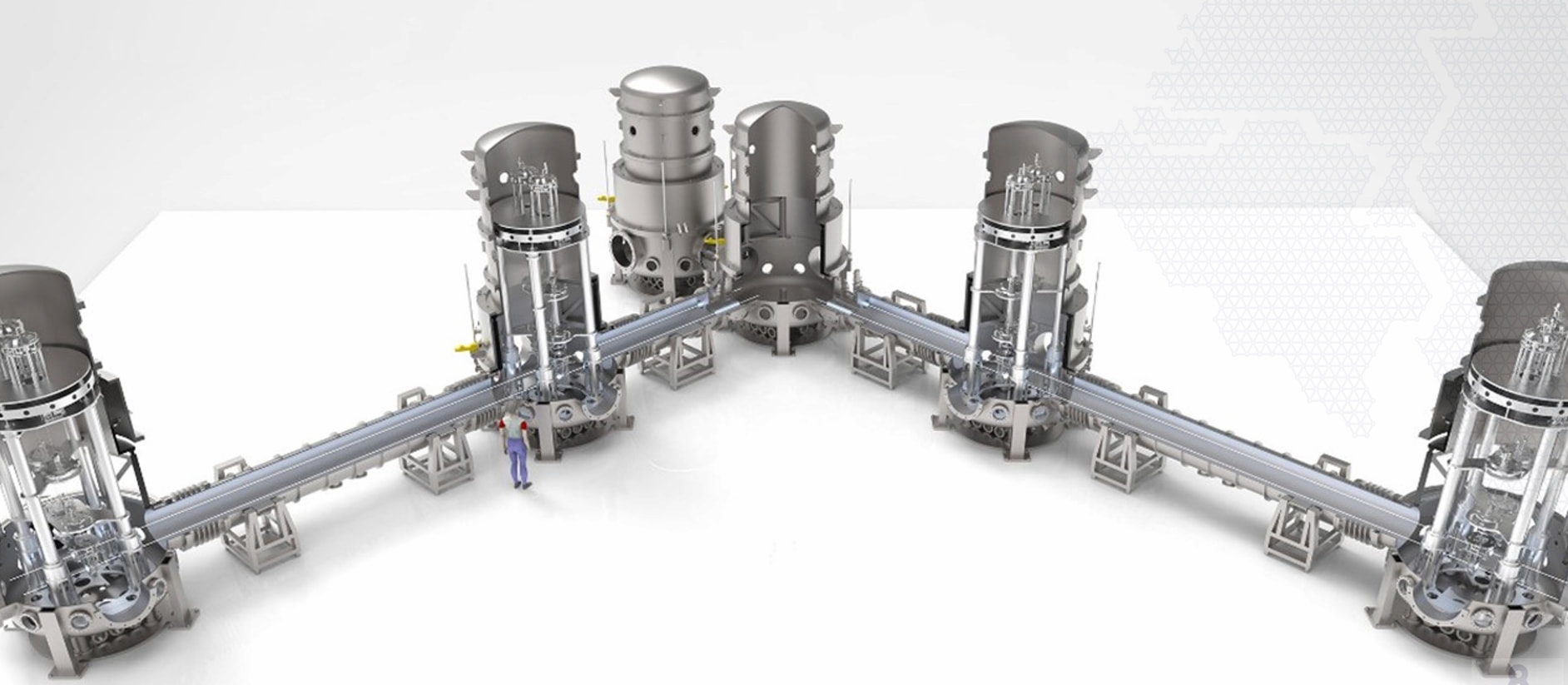
low-vibration cooling for the Einstein Telescope.
Mechanical cryocoolers are widely used in scientific instrumentation, but their vibrations can interfere with sensitive measurements. Meeting demanding vibration requirements may therefore require more than conventional vibration attenuation.
Our Einstein Telescope showcase explores this challenge in an application with exceptionally strict vibration requirements. Discover the cryogenic cooling approach developed for the telescope’s mirrors.
Cryogenic cooling for high-resolution microscopy
CryoFox.
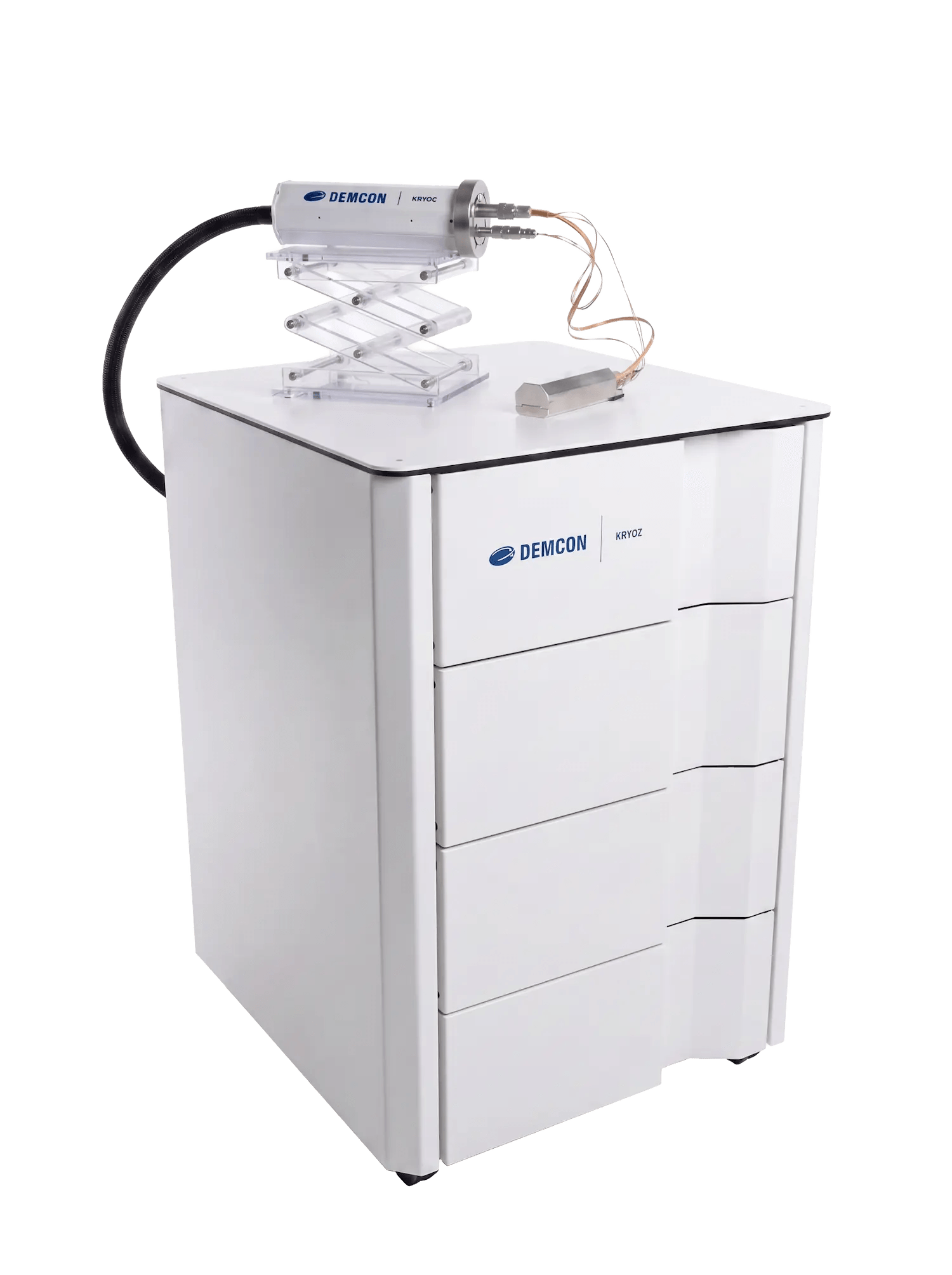
At Demcon kryoz we have developed an ultra-low- vibration miniature cryogenic cooler as a OEM-product.
Our miniature cryocooler demonstrates how cryogenic engineering can support precision instrumentation. Developed as a product for original equipment manufacturers, it combines ultra-low vibration, stable temperature control and sample positioning for high-resolution microscopy.
The system provides cryogen-free cooling and remote operation, bringing together thermal performance and movement control in a single platform.
highlights
- Simple to use - turn-key cryocooler solution
Fast (de)installation (30min.) with minimal demands. - Vibration < 1 nm p2p with < 3 nm min-1 drift
Extreme low vibration and drift performance. - Wide temperature range: < 100 – 475 Kelvin ± 10 mK
Accurate temperature control across the entire range. - Cryogen-free system - Low OpEx / no maintenance
No LN2, no frost, no hassle. Uses cheap N2 5.0 gas. - Move your sample in 6 degrees of freedom
Cryocooler allows 6 DOF movement. - Fully remote control - open software
Beckhoff / Python compatible control. Click and cool.
"behavior at very low temperatures."
“In physics, cryogenics is the production and behavior of materials at very low temperatures. This field of physics poses new challenges and requires a broad understanding of fluid dynamics, material sciences and different cooling techniques. We have dedicated labs and equipment suitable for developing experimental setups that can run tests under cryogenic conditions. For example, we developed our own cryogenic cooler, which found its way into the Cryo-EM workflow providing localized cooling in the high- vacuum environment of a scanning electron microscope (SEM). This is only one of the many examples demonstrating our know- how in this challenging field.”


