
Lunar ambitions.
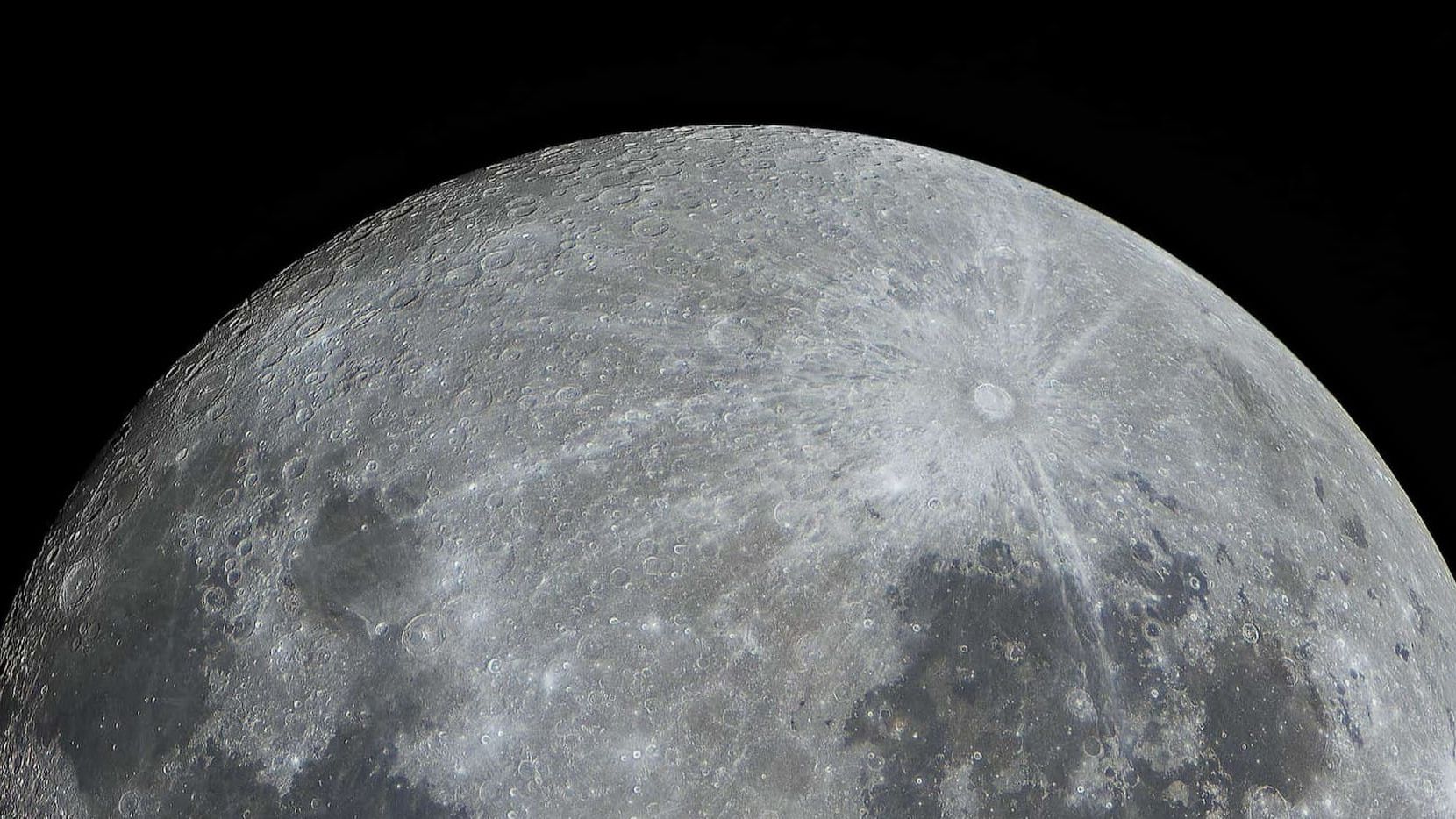
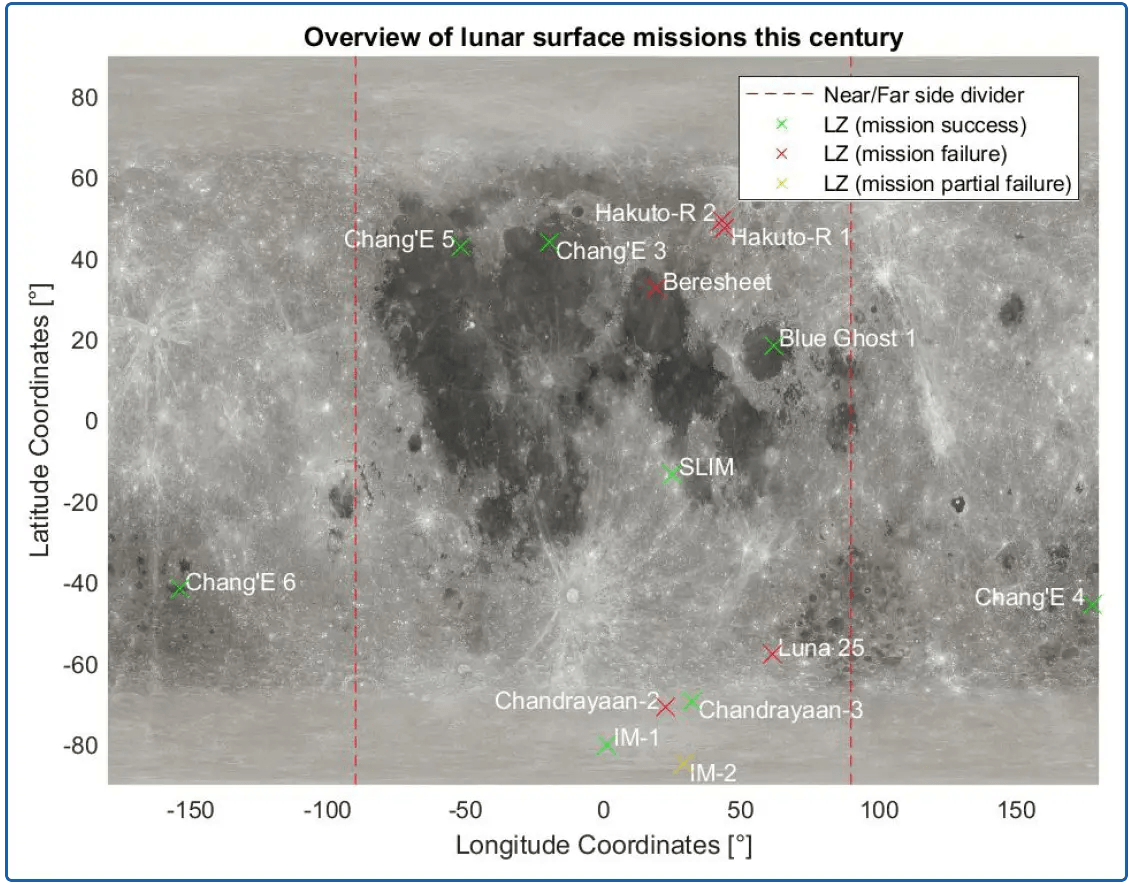
Lunar exploration is entering a new era after decades of inactivity. The discovery of frozen water at the Moon’s south pole, confirmed in 2018, has transformed the feasibility of long-term missions. This resource enables fuel production and life support, making permanent bases realistic. Historically, missions targeted equatorial regions for simplicity, but interest has shifted toward the south pole. Figure 1 shows landing zones of recent missions, clearly illustrating this trend toward polar regions. This change introduces new engineering challenges, particularly in thermal management.
harsh lunar climate.
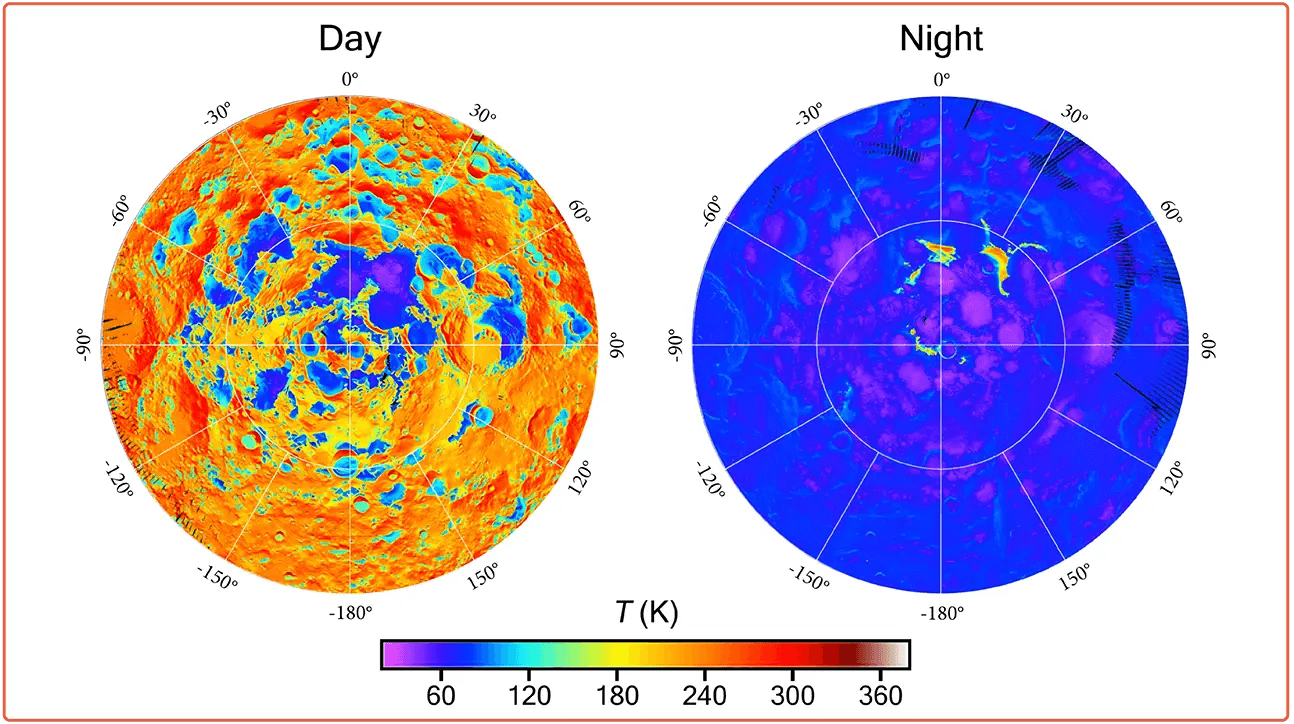
The Moon’s lack of atmosphere leads to extreme temperature swings—from +120 °C in sunlight to –170 °C in darkness. At the south pole, long periods of shadow intensify these conditions, potentially freezing fluids and damaging electronics. Figure 2 illustrates the thermal profile in polar regions, emphasizing the need for advanced thermal control systems to survive lunar nights lasting up to 14 Earth days.
Figuur 2 - [Williams, Jean-Pierre & Greenhagen, B. & Paige, D. & Schorghofer, Norbert & Sefton-Nash, Elliot & Hayne, P. & Lucey, P. & Siegler, Matthew & Aye, Klaus-Michael. (2019). Seasonal Polar Temperatures on the Moon. Journal of Geophysical Research: Planets. 124. 10.1029/2019JE006028. ]
temperature control loop.
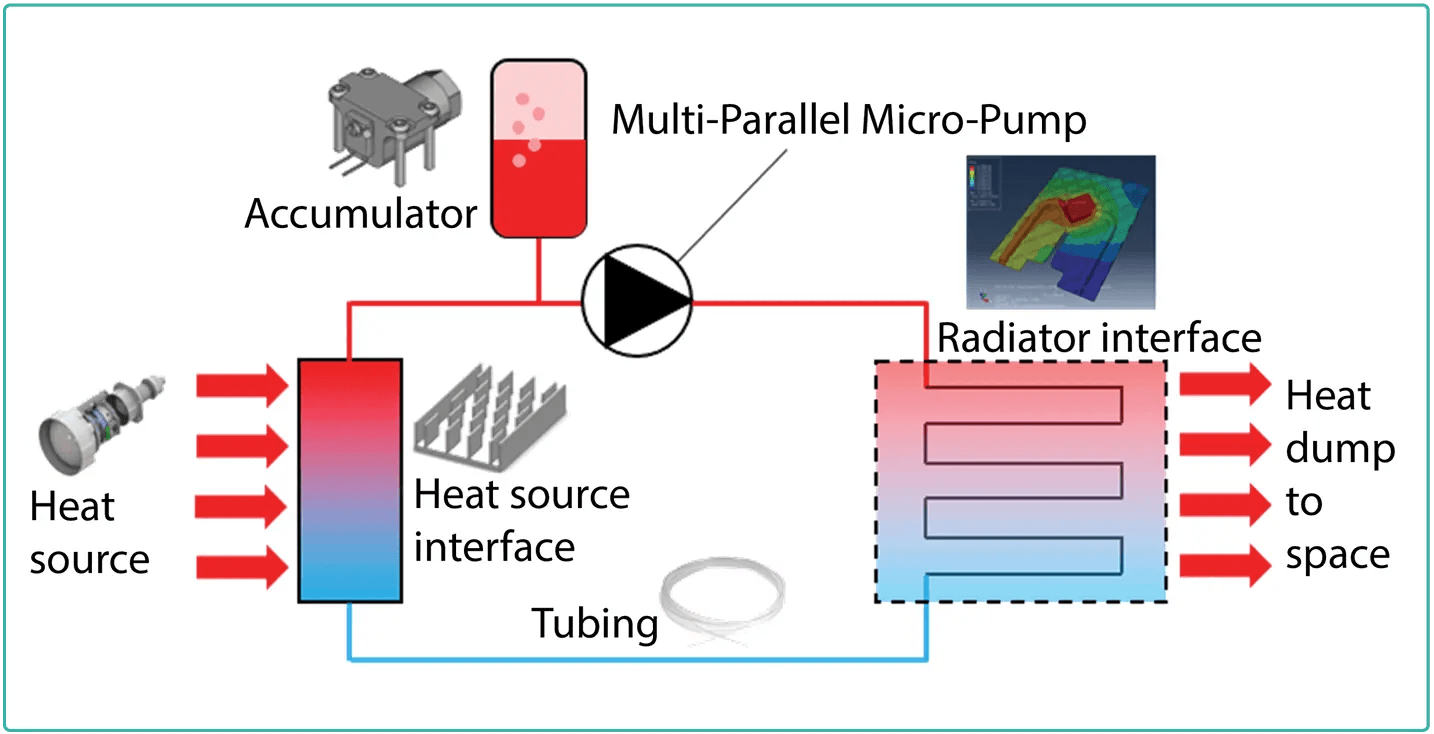
To meet thermal challenges, Demcon Kryoz developed the miniMPL system: a single-phase mechanically pumped loop with multiple pumps, an accumulator, radiator, and fin-model heat exchanger. Figure 4 shows the system layout. The miniMPL is compact, modular, and scalable—originally designed for CubeSats but adaptable to larger platforms. Its redundancy and efficient heat transfer make it suitable for robotic missions and long-duration operations. Compared to traditional heat pipes or hybrid systems, miniMPL offers a strong balance of reliability, mass efficiency, and integration flexibility.
Demcon kryoz miniMPL.
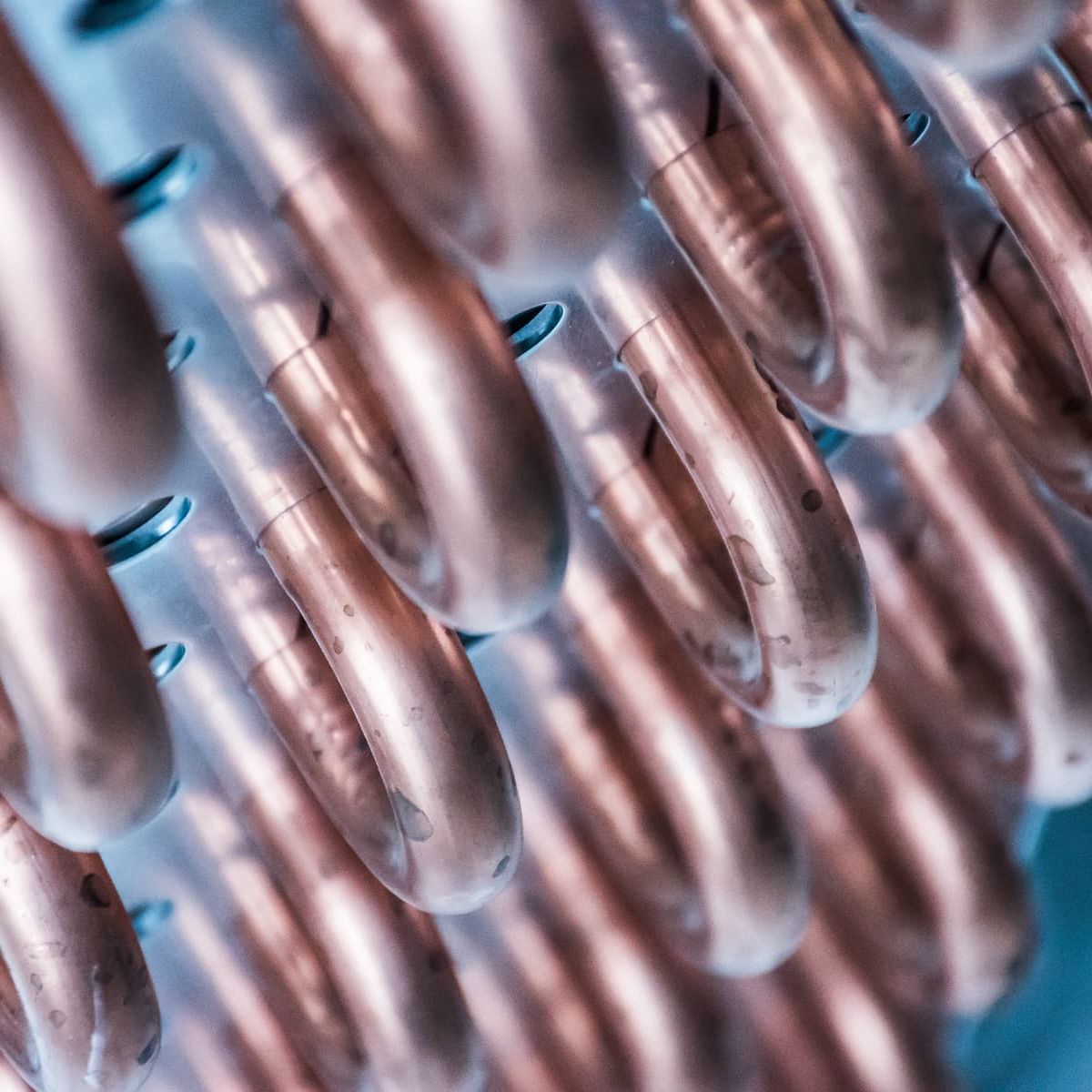
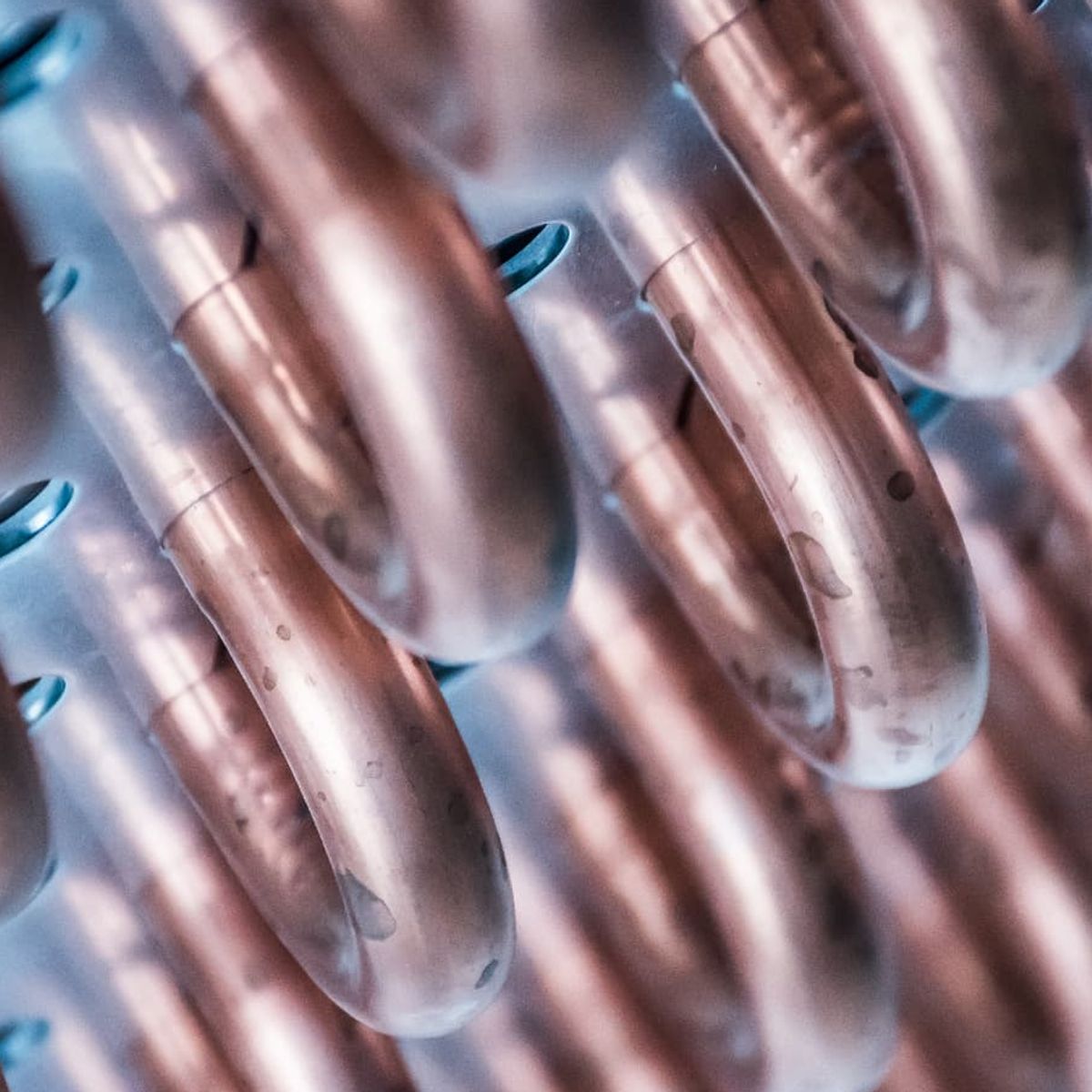
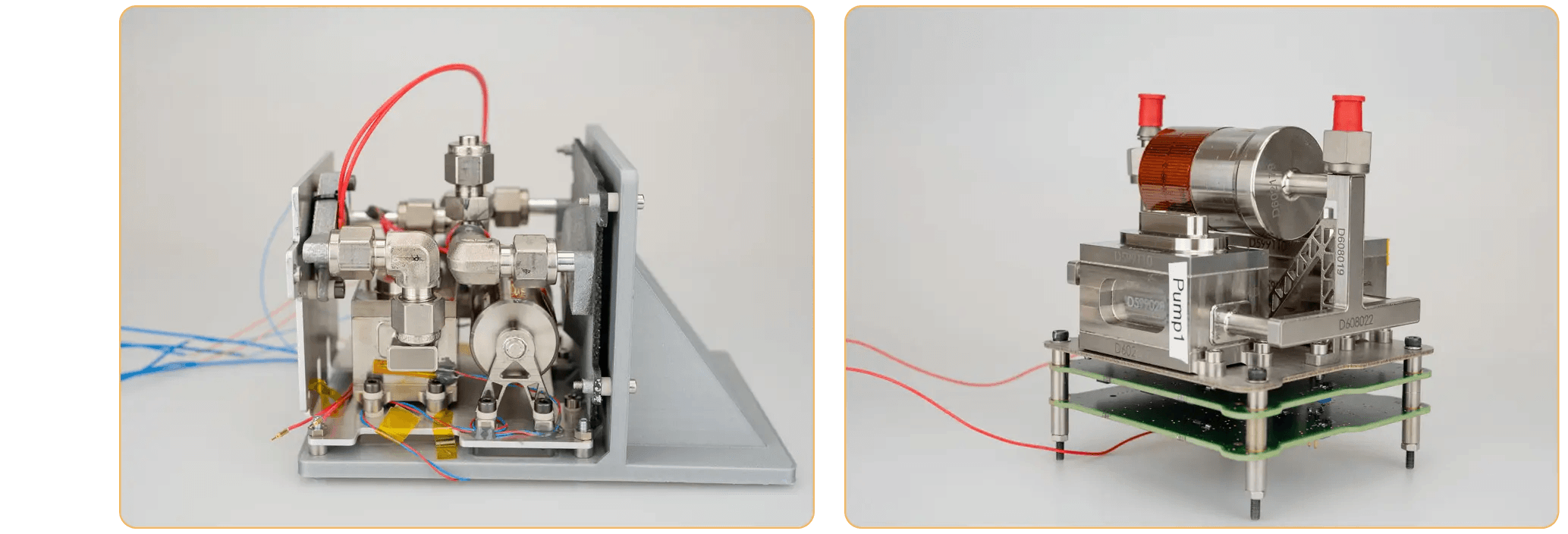
Demcon kryoz’s miniMPL (Figure 5) is an advanced thermal management solution for small satellites such as CubeSats and microsatellites. Combining compact design with exceptional performance, it occupies less than 1U and weighs about 1 kg, yet removes 40–100 W of heat while consuming only 2–5 W of electrical power. The system allows heat switching for precise thermal control, mechanical decoupling for vibration isolation, and a scalable architecture adaptable to different mission profiles. MiniMPL ensures reliability and efficiency under strict space and power constraints, enabling advanced payloads, improving mission flexibility, and extending operational lifetime—making it the ideal choice for demanding space applications like lunar missions.
future outlook permanent bases.
Future lunar operations aim to establish long-term habitats for science and resource use. These habitats require thermal systems to support crews for up to 15 years. The scalable miniMPL offers a unified solution for both mobile and stationary setups, making thermal control key to safe, sustainable lunar operations.
![[Carril, P. (2019, July 4). Artist impression of activities in a Moon Base. European Space Agency.]](/.img/animated_true&w_2400&f_png&q_100/dam/kryoz/public/thermal-management-for-Moon-survival./Figuur-5-v1.webp)
"no sustainable lunar exploration without thermal control."
"If we want long-term missions on the Moon to succeed, thermal management is going to be essential. With those extreme temperature swings, long periods of darkness, and the challenge of operating on the lunar surface for years, you need thermal control systems that are reliable, efficient, and able to scale."